
How to Find Orange County Arrest Records
An arrest record marks the moment a person is taken into custody and booked. Booking captures the name, the charges, the date and time, and often a photo. In Orange County, a person arrested locally may be processed through the Orange County Correctional Facility at 110 Wells Farm Road in Goshen, phone 845-291-7713. From there the case heads to the charging court, which may be a town, village, or city court for arraignment, County Court for felonies, or Supreme Court in some matters.
Here is the honest part. No official Orange County public arrest blotter, mugshot gallery, or current-inmate roster was found in the county sources reviewed. So there is no single online page that lists every recent arrest. The practical path uses the jail, the courts, and state systems together.
- Call the Orange County Jail at 845-291-7713 to confirm whether someone is held locally.
- Use WebCriminal for criminal cases with a future court date in selected Orange County courts.
- Check VINELink, which the Sheriff links for custody status and alerts.
- Use the state DCJS process for an official criminal history.
Avoid third-party mugshot sites. They are often out of date, charge to remove records, and are not official sources.
Finding Recent Orange County Arrests
Recent arrests are the hardest to track online, since the county posts no live booking feed. The fastest reliable check is the jail phone line at 845-291-7713. For a court angle, WebCriminal shows criminal cases that carry a future appearance date in selected courts, which can confirm that a charge has reached the court stage. The site warns of occasional update delays, so a brand-new matter may not show right away.
The Sheriff's Office, reachable at 845-291-4033, runs the Correctional Facility and the Investigations unit. For custody alerts that follow a person through the system, VINELink lets you register for notifications. State prison custody, which comes after sentencing, is searched through NY DOCCS, and federal custody through the Bureau of Prisons. The Orange County inmate records page covers the jail lookup path in full.
Arrest Record vs Criminal Court Record
An arrest record and a criminal court record are not the same thing. An arrest record is the law-enforcement snapshot at booking. A criminal court record is what the court builds as the case moves through arraignment, motions, plea or trial, and sentence. One arrest can lead to a long court file, a quick dismissal, or no charge at all. The comparison below sums the split.
| Point | Arrest Record | Criminal Court Record |
|---|---|---|
| Who creates it | Police or the Sheriff at booking | The court that hears the case |
| What it holds | Name, charges, booking date, photo | Charges, pleas, motions, disposition, sentence |
| Where to find it | Jail, Sheriff, VINELink | WebCriminal and the court clerk |
| Means guilt? | No, an arrest is only an accusation | Only a conviction shows guilt |
For the full court side, including how to read a case file, see the Orange County court records page.
Orange County Criminal Records in the Courts
Once a charge reaches court, the criminal records pile up in the case file. County Court handles felony trials outside New York City and keeps the bulk of serious criminal records. The three City Courts and the town and village Justice Courts handle misdemeanors, lesser offenses, and many arraignments. A criminal record can include the indictment or superior court information, the arraignment, motions, the plea, the trial, the sentence, any warrants, and the certificate of disposition.
WebCriminal is the state tool that lists many of these cases when they have a future appearance date. It supports a case identifier search, a defendant name search, and a court calendar search. For older closed cases or full document copies, the Orange County Clerk holds the court papers. An official statewide criminal history comes from DCJS, not from a court portal. The Orange County court dockets page covers how to track those appearance dates.
Charges vs Convictions
The gap between a charge and a conviction is the most important thing to read in any criminal record. A charge is an accusation. A conviction is a finding of guilt after a plea or a trial. Many charges end in dismissal, reduction, or acquittal. Reading the disposition tells you what actually happened. The comparison below lays out the difference.
| Point | Charge | Conviction |
|---|---|---|
| Meaning | A formal accusation | A finding of guilt |
| Stage | Filing through trial | After a plea or verdict |
| Proof of guilt? | No | Yes |
| Can it be sealed? | Yes, often after a favorable end | Sometimes, by petition or Clean Slate |
A favorable end, such as a dismissal or acquittal, may seal the records under state law. That keeps the matter out of ordinary public view.
Sealing Orange County Arrest and Criminal Records
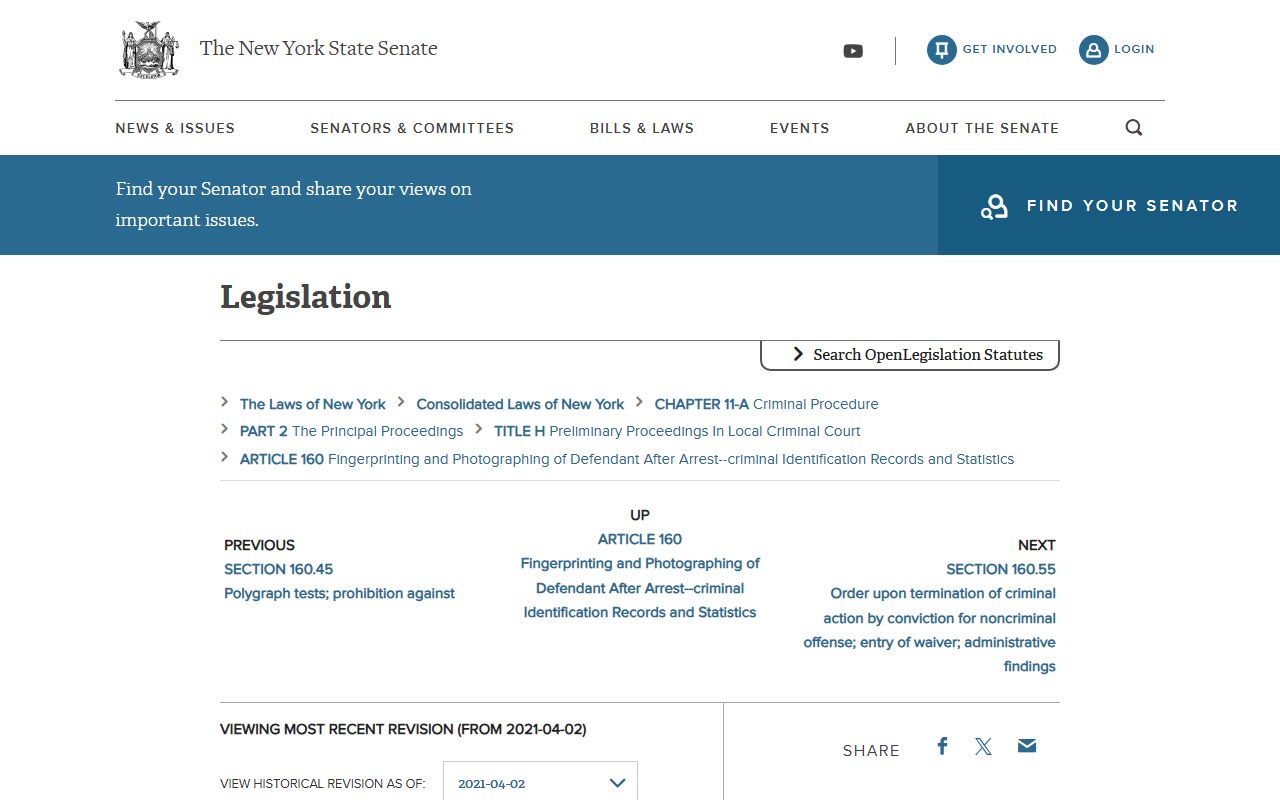
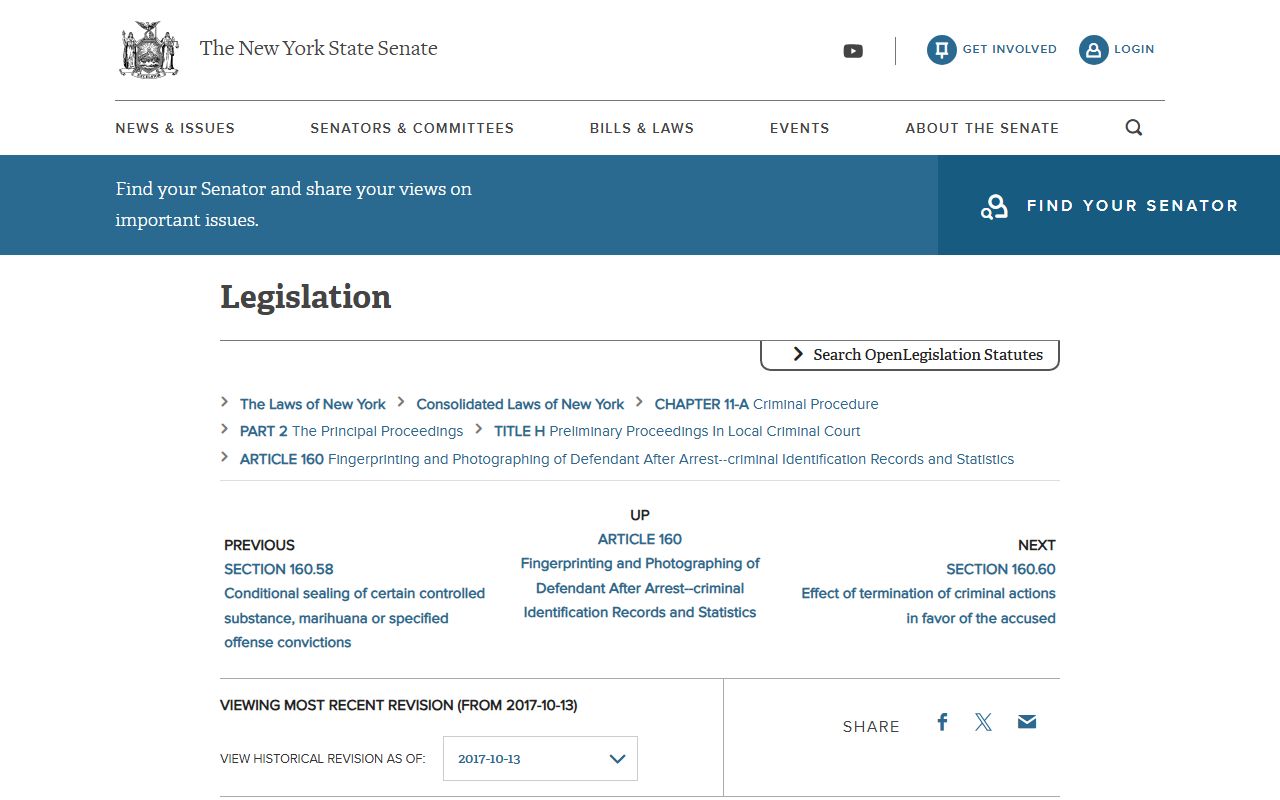
New York seals records far more often than it expunges them. Several statutes set the tracks. Cases that end in the accused's favor are generally sealed under Criminal Procedure Law § 160.50. Certain noncriminal outcomes and many traffic infractions are sealed under CPL § 160.55. Clean Slate, under CPL § 160.57, automatically seals qualifying convictions after set waiting periods. A petition to seal up to two convictions after ten years runs under CPL § 160.59.
The image below shows CPL § 160.50, the favorable-termination sealing statute, on the New York State Senate page for CPL 160.50.
The petition track under CPL § 160.59 is the one most people apply for by hand. The image below shows that statute on the New York State Senate page for CPL 160.59.
To petition, an applicant gets certificates of disposition, completes the sealing application, and serves the district attorney; the court may hold a hearing. The right venue is the court that handled the original case, so an Orange County matter goes back to County Court, a City Court, or Supreme Court. The comparison below sums sealing and expungement.
| Point | Sealed | Expunged |
|---|---|---|
| What happens | Public access is shut off | The record is removed or voided |
| New York use | The main tool, CPL Article 160 | Rare; used for some marijuana and vacatur matters |
| Who can still see it | Some agencies, courts, and licensing bodies | Far fewer parties |
| How to get it | Automatic or by petition | By specific statute or motion |
Note: A sealed case should not appear in ordinary public portals, but a defendant can still access their own sealed record under the statutes.
State Criminal Records and Background Checks
An official statewide criminal history in New York comes from the Division of Criminal Justice Services, not from a court portal. DCJS keeps the central rap sheet, and a fingerprint-based check is the standard route for employers and licensing that the law allows. Court portals like WebCriminal show case-by-case data, but they are not a substitute for a full DCJS history.
Background checks have limits. Sealed records under CPL Article 160 should not surface in most checks, and the Clean Slate law removes more older convictions over time. Many uses of criminal records for hiring, housing, and credit are governed by federal and state fair-information rules, so a private search is not a lawful background check. For a court date or case ID, the court records page covers the public portals.
The Orange County District Attorney
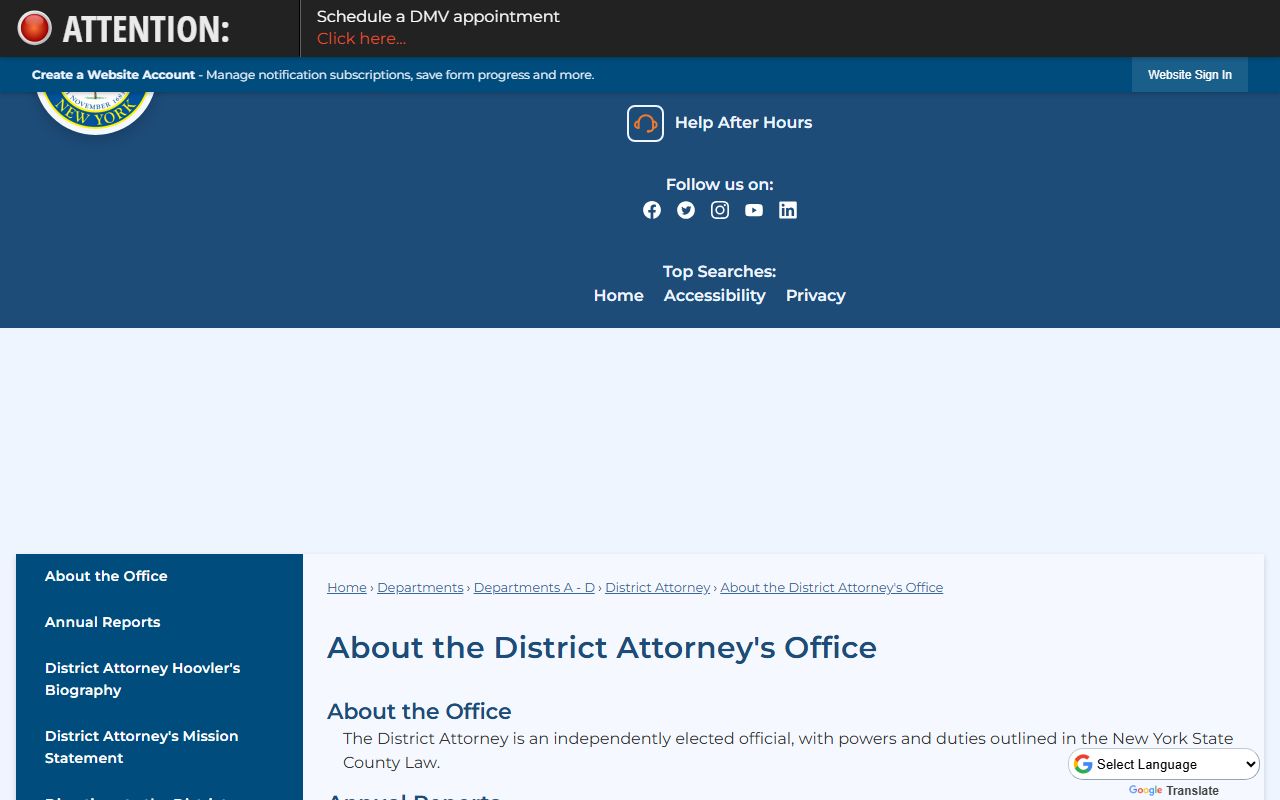
The Orange County District Attorney prosecutes crimes in the county and is led by David M. Hoovler, who was sworn in for a fourth term in January 2026 by County Clerk Kelly Eskew. The office sits at 255-275 Main Street in Goshen, phone 845-291-2050. The DA is an independently elected official with powers set by New York State County Law, and the office runs several specialized prosecution units.
The image below shows the District Attorney's office page, with contact and unit details, on the Orange County District Attorney's Office page.
The DA also announced a plan to bring decentralized policing under one records-management system to serve police, probation, the prosecution, and the defense bar. That kind of shared system can change how arrest and case data move between agencies over time.
Defense Help in Orange County
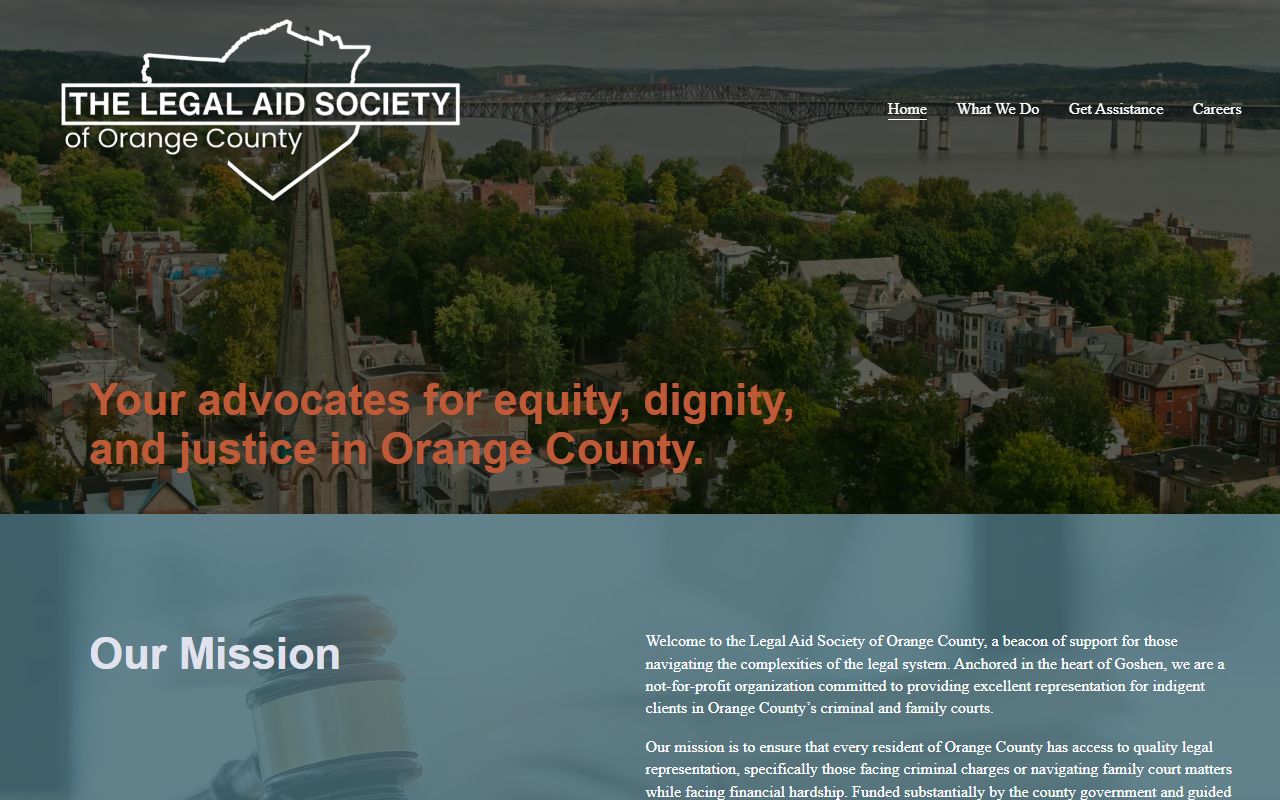
People who cannot afford a lawyer in a criminal case have a right to assigned counsel. The Legal Aid Society of Orange County is the local nonprofit that represents indigent clients in criminal and family court. Its office is at 14 Scotchtown Ave in Goshen, phone 845-291-2454, open Monday through Friday from 9 a.m. to 5 p.m. Intake starts with a call, an eligibility review, and then an attorney assignment based on the court.
The image below shows the Legal Aid Society of Orange County site, the local indigent-defense provider, at the Legal Aid Society of Orange County website.
If you have an open warrant tied to a missed court date, speak with counsel before you appear where possible. The Orange County warrant records page covers how to check and resolve a warrant.
Federal Criminal Cases from Orange County
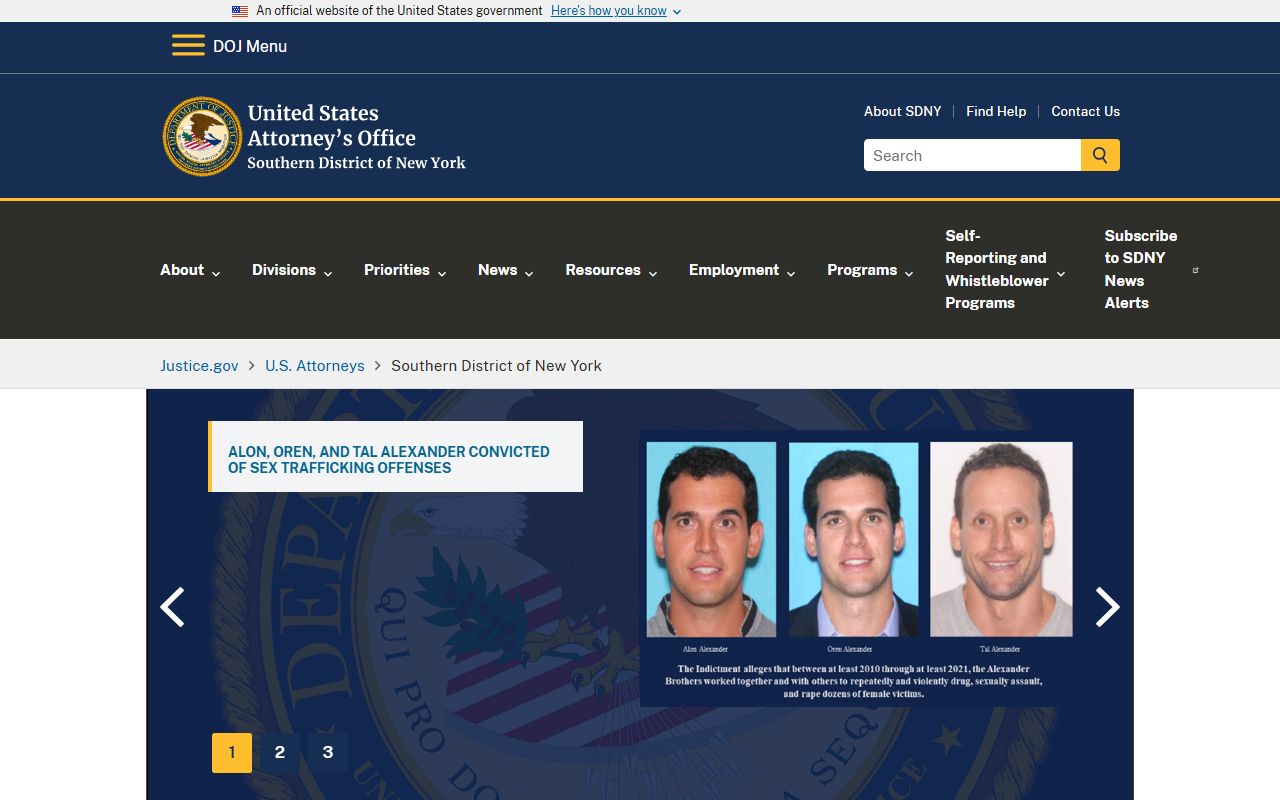
Some Orange County criminal matters are federal. Federal cases are prosecuted by the U.S. Attorney's Office for the Southern District of New York, which covers Orange and several nearby counties. Federal arrests and charges follow federal rules and are heard in federal court, not in the County Court.
The image below shows the U.S. Attorney's Office for the SDNY, the federal prosecutor for the region, at the U.S. Attorney's Office, Southern District of New York page.
Federal custody is searched through the Bureau of Prisons locator, and federal court dockets run through PACER. The court records page covers the federal court access path in more depth.
DUI and DWI Arrests in Orange County
A drunk or drugged driving arrest sits at the line between a traffic matter and a criminal case. In New York, a DWI charge is a crime, so it can carry an arrest, booking, and a criminal court record, while a lesser DWAI infraction is handled more like a traffic case. The court that hears it depends on the level of the charge and where the stop happened.
Because of that overlap, DUI and DWI records can touch both the criminal and the traffic systems. For the traffic side, including how a court traffic record differs from a state DMV driver record, see the Orange County traffic court records page.