
How to Search Orange County Court Records
There is no single search that covers every Orange County case. Records sit across several free state systems and one paid county system. Use WebCivil Supreme for New York Supreme Court civil matters. Use WebCriminal for many criminal cases that carry a future court date. Use WebSurrogate for estate and probate files. Use the Orange County Clerk for certified copies and recorded court papers. Each tool covers only a slice of the whole. The first step is always to match the case type to the right court and the right portal.
Gather what you know before you start. A party name helps. An index number or case number helps more. A filing year trims a long list fast. Online case data is not the same as a certified copy, so plan a second step if you need a stamped document for court or a benefits claim.
- Decide the case type. Divorce, foreclosure, and large civil suits route to Supreme Court. Felonies route to County Court. Misdemeanors, traffic, and small claims sit in City or Justice Courts. Estates go to Surrogate's Court.
- Open the matching portal. WebCivil Supreme for civil cases, WebCriminal for criminal appearances, WebSurrogate for estates.
- Search by party name or by index or case number. Add a filing year or pick the Orange County courts to cut the result list down.
- Open the case to read the parties, the status, and any calendar dates. Note the index or case number for later.
- Order a certified copy from the Orange County Clerk or the court's Chief Clerk when you need an official document.
The state case portals are free. The image below shows the WebCriminal case identifier search, the tool for many Orange County criminal matters, reached through the NY Courts WebCriminal case identifier search.
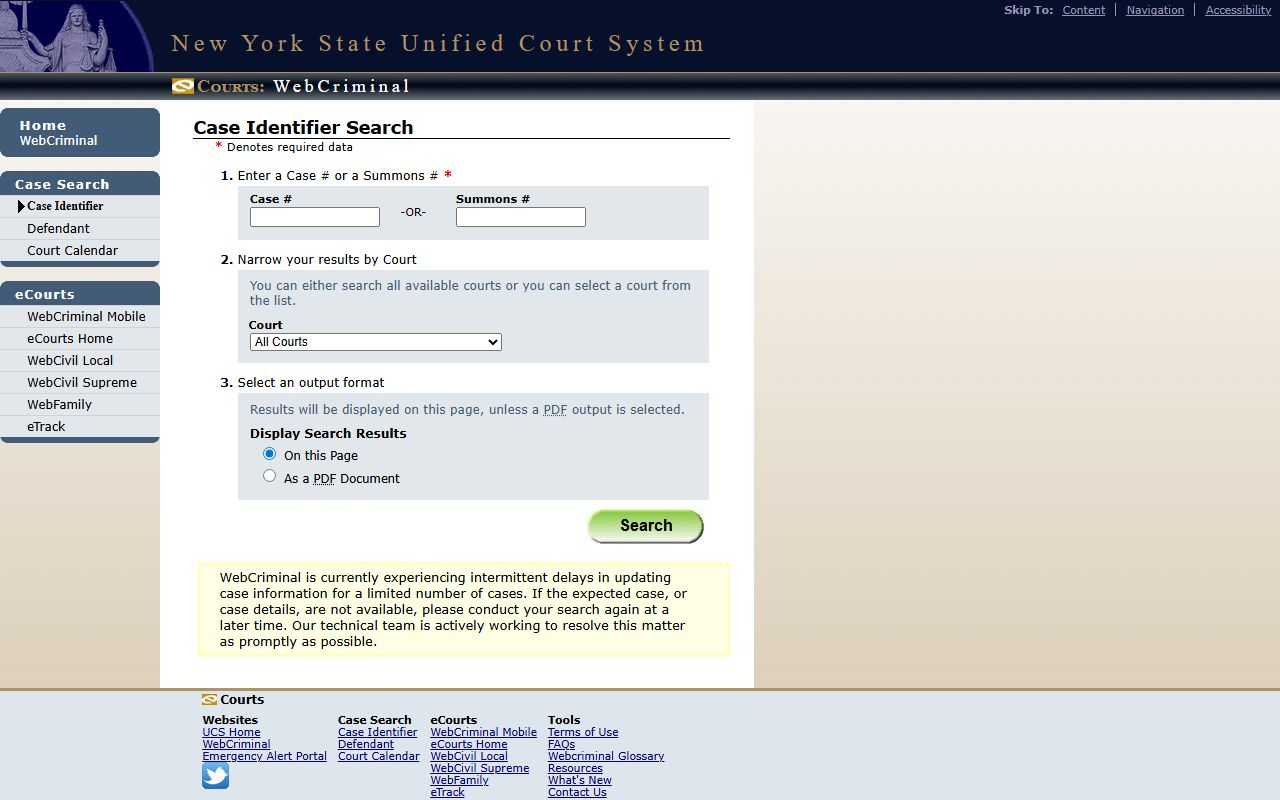
WebCriminal shows criminal cases that have a future appearance date in selected New York courts, so a closed or sealed matter may not appear there at all.
WebCivil Supreme Search Fields
WebCivil Supreme returns past, present, and future case information for New York civil Supreme Courts only. It offers Index Search, Party Search, Attorney or Firm Search, and Justice Search, plus calendars and a document search for published decisions. For Orange County work, the court list includes both Orange County Court and Orange Supreme Court, and you can hold Ctrl to pick more than one. The field table sums the main inputs on the index and party search form.
| Field | Type | Required | Notes |
|---|---|---|---|
| What to Search | Mode/tab | Yes | Index, Party, Attorney/Firm, or Justice Search. |
| Index Number | Text | Conditional | Enter for Index Search only. |
| Name | Text | Conditional | Used for Party Search. |
| Role | Radio | No | Plaintiff/Petitioner, Defendant/Respondent, Other, or All. |
| Court(s) | Multi-select | No | Includes Orange County Court and Orange Supreme Court. |
| Year of Filing | Dropdown | No | 2026 back through 1983. |
| Case Status | Radio | No | Open (Active, Restored) or All. |
| Create output as | Radio | No | HTML page or PDF. |
The justice search works best with a first and last name. Document Search pulls published decisions by index number and county, but it does not replace a certified copy from the Clerk.
Note: WebCivil Supreme covers civil Supreme Court cases only, so criminal, family, and local civil matters need a different portal.
Types of Orange County Court Records
Orange County produces many record types because so many courts share the work. Civil and criminal files are searched the most. But family, probate, traffic, and matrimonial records each live in their own system, and each carries its own access rules. Which court made the record tells you where to look and what you can see.
- Civil Supreme records - suits over $25,000, foreclosure, injunctions, and tax matters, searchable on WebCivil Supreme.
- County Court criminal records - felony cases with indictment, plea, trial, and sentence data, listed in WebCriminal where there is a future date.
- City Court records - Middletown, Newburgh, and Port Jervis handle misdemeanors, civil claims up to $15,000, small claims, traffic, and housing.
- Family records - custody, support, and paternity, kept by Family Court and largely closed to the public.
- Matrimonial records - divorce files in Supreme Court, limited to parties and their lawyers.
- Probate records - wills and estates at the Orange County Surrogate's Court.
- Traffic records - tickets in City, Town, and Village Courts, separate from your DMV driver record.
For the day-to-day calendar side of these files, the Orange County court dockets page covers how appearances and entries are listed.
What an Orange County Court Record Shows
A court record holds the facts of a case from filing to disposition. The exact fields change by case type, but most Orange County records share a common core. Civil Supreme matters use an index number. WebCriminal uses a case number or a summons number. City and Justice Court files track local docket numbers. The inventory below lists the fields you will see most often when you open a result.
| Field | What It Shows |
|---|---|
| Index / Case Number | The unique ID for the case and the key to ordering copies. |
| Court | Orange Supreme, County, a City Court, Family, or Surrogate's Court. |
| Parties | Plaintiff or petitioner, defendant or respondent, and other roles. |
| Filing Date / Year | When the case began; WebCivil exposes filing years from 1983 on. |
| Case Status | Open, active, restored, disposed, or sealed. |
| Judge / Justice and Part | The assigned justice or judge and the courtroom part. |
| Appearance Dates | Calendar dates, part, and matter type where listed. |
| Docket Entries | Motions, orders, judgments, pleas, and adjournments. |
| Disposition | The outcome, such as a judgment, plea, dismissal, or sentence. |
| Financial Fields | Filing fees, fines, surcharges, bail, and payments into court. |
Sealed cases and matrimonial files do not show full detail to the public. Social Security numbers, financial account numbers, and the identities of minors or victims are kept out of public view by law.
Common Terms in Orange County Court Records
Court files lean on legal terms that trip up many searchers. A quick read of the most common ones makes a record far easier to follow. The list below defines the terms that show up across civil, criminal, family, and probate files in Orange County.
- Plaintiff
- The party who starts a civil action.
- Defendant
- The party sued in a civil case or charged in a criminal case.
- Petitioner
- The party asking the court for relief in a proceeding, family matter, or estate.
- Respondent
- The party answering a petition.
- Index Number
- The New York Supreme Court civil case identifier.
- Summons
- A document starting a civil case or directing a court appearance.
- Complaint
- A pleading that states the claims against a defendant.
- Motion
- A written or spoken request for a court order.
- Order
- A court directive signed by a judge.
- Judgment
- The final court ruling that grants relief or sets an obligation.
- Disposition
- The outcome of a case or charge.
- Docket
- The running list of filings and events in a case.
- Calendar
- The court schedule of appearances or hearings.
- Part
- The courtroom or judge unit that hears a matter.
- Adjournment
- A postponement to a later date.
- Arraignment
- The first criminal appearance, where charges and rights are read.
- Indictment
- A grand-jury charging paper used in felony cases.
- Superior Court Information
- A felony charging paper used when a defendant waives indictment.
- Plea
- The defendant's formal answer to the charges.
- Conviction
- A judgment of guilt after a plea or trial.
- Sentence
- The punishment imposed after a conviction.
- Bail
- Security set to make sure a defendant returns to court.
- Bench Warrant
- A warrant a judge issues, often for a missed appearance.
- Probation
- Court-ordered supervision served in the community.
- Parole
- Post-prison supervision run by DOCCS.
- Seal
- To restrict public access to a record under law or court order.
- Expunge
- To remove or void a record; New York relies on sealing more than expungement.
- Probate
- The Surrogate's Court process that proves a will and grants fiduciary authority.
- Administration
- The estate process used when a person dies without a will.
- Bail Bond
- A surety arrangement that secures a defendant's release and return.
Public Access Laws for Orange County Court Records
New York treats court records and agency records under two different rules. Court case files are governed by Judiciary Law, not by the Freedom of Information Law. The NY Courts FOIL page states plainly that court-record requests should not go to the Office of Court Administration under FOIL. Agency records, such as many sheriff and county administrative files, do fall under FOIL. So an Orange County court records search runs through a court clerk, while a request for a sheriff report may run as a FOIL request instead.
A few statutes shape what stays open and what stays closed. The key ones appear below in plain English.
Key Statutes:
New York Judiciary Law § 255 - a court clerk must search files on request, for lawful fees, and certify the result.
New York Public Officers Law § 87 - the FOIL section that opens agency records, with exemptions for privacy and law enforcement.
New York Public Officers Law § 89 - the FOIL procedures, including a ten-day appeal window and Article 78 review.
The split matters in practice. Court files at the County Clerk and the court clerks fall under Judiciary Law. Sheriff and county office records fall under FOIL. More on filing a request sits on the Orange County public records page.
Restricted and Confidential Orange County Court Records
Not every Orange County court record is open. Family Court files are closed by Family Court Act § 166 and are not open to indiscriminate public inspection. Divorce and matrimonial files are limited by Domestic Relations Law § 235 and the County Clerk's own policy, so the general public cannot pull those documents. Sealed criminal cases fall under Criminal Procedure Law Article 160. Adoption files, juvenile matters, and grand-jury minutes are also confidential.
The names of sex-offense victims get special protection. The image below shows Civil Rights Law § 50-b, the statute that shields victim identity, on the New York State Senate page for Civil Rights Law 50-b.
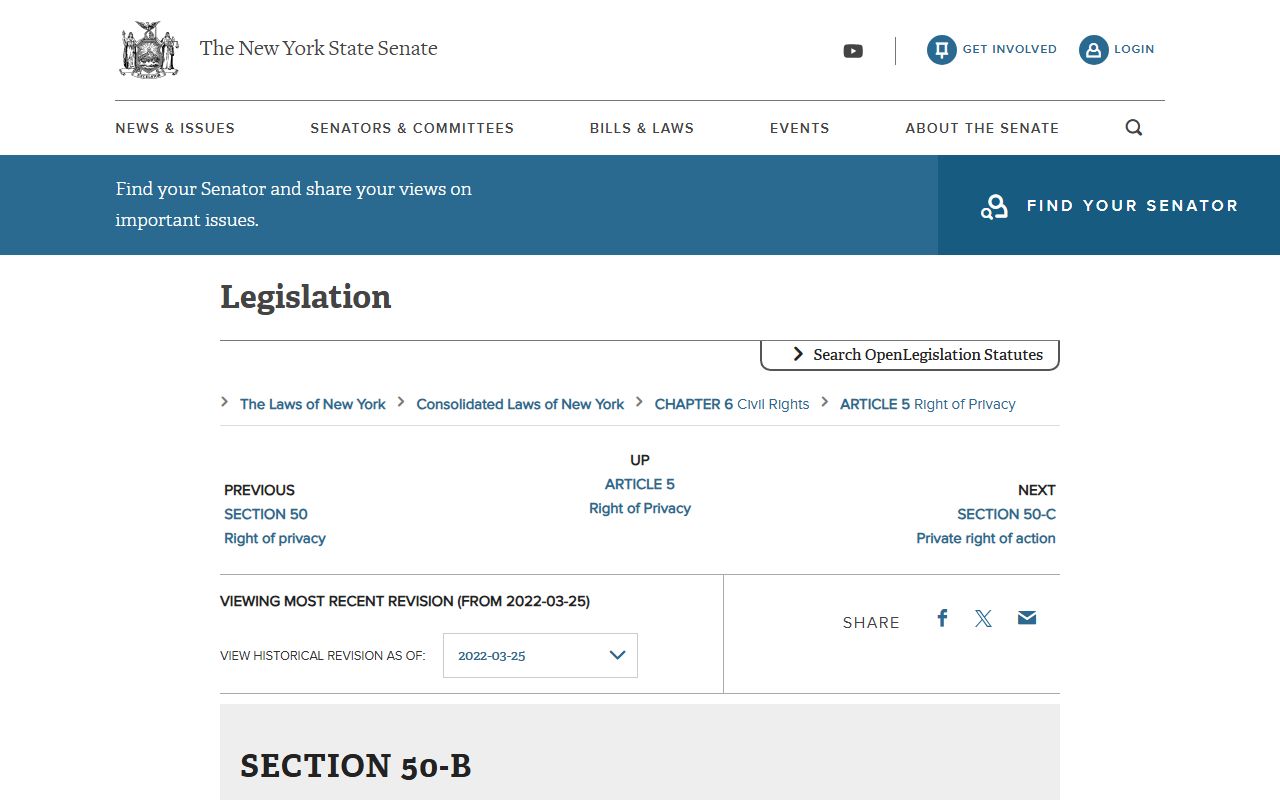
That law bars public inspection of reports, photographs, court files, and other documents that identify a sex-offense victim. To view a sealed or restricted file, a person usually must be a party, a lawyer of record, or hold a court order. New York runs several sealing tracks, and the right court for any petition is the court that handled the original case.
Estate and Probate Records in Orange County
Estate and will records run through the Orange County Surrogate's Court at 30 Park Place in Goshen, phone 845-476-3655. The free WebSurrogate portal lets the public search estate files by name or file number, browse old index books, and look up wills filed for safekeeping. WebSurrogate does not redact documents, so parties must remove confidential personal information before filing. Restricted files and documents are blocked under Surrogate's Court Uniform Rule 207.64.
The portal posts document images filed on or after February 19, 2014. Older unrestricted documents may be viewed on public access computers inside the courthouse. For a fuller walkthrough, see the Orange County Surrogate's Court page.
Federal Court Records for Orange County
Federal cases from Orange County are heard in the U.S. District Court for the Southern District of New York. The district draws jurors from Orange and seven other counties, including Westchester, Rockland, Putnam, and Dutchess. The U.S. Bankruptcy Court for the same district also serves Orange County, and White Plains is the practical federal courthouse for the lower Hudson Valley. Federal matters can include federal criminal cases, civil rights claims, federal-question civil suits, and bankruptcy.
The screenshot below shows the SDNY District Court homepage, the official federal trial court for the county, on the U.S. District Court for the Southern District of New York site.
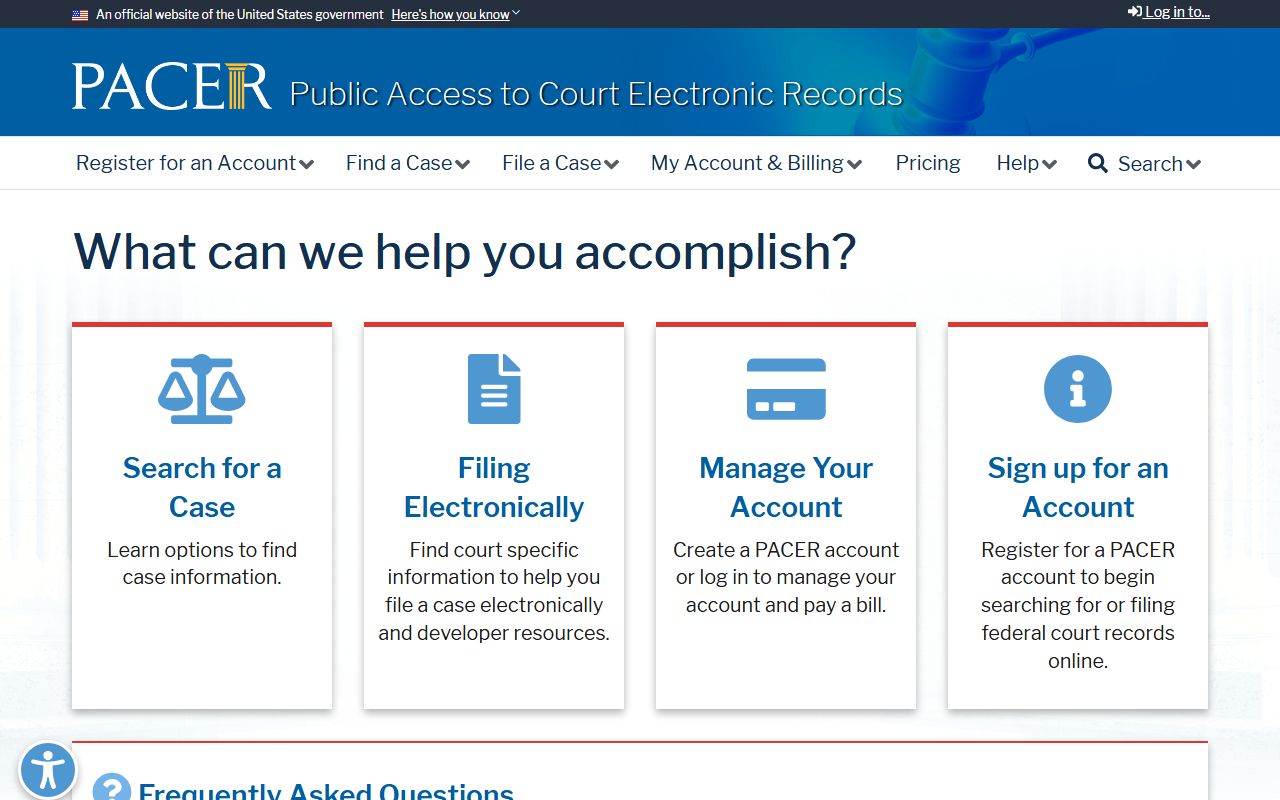
Federal dockets are searched through PACER, the official federal records system. Users register for an account, then search district, bankruptcy, and appellate dockets across the country. The image below shows the PACER homepage at the federal PACER service site.
PACER charges per page for most documents. For free reading of opinions and some docket data, CourtListener is a high-authority option, though it is not the official source. The image below shows CourtListener at the CourtListener legal research site.
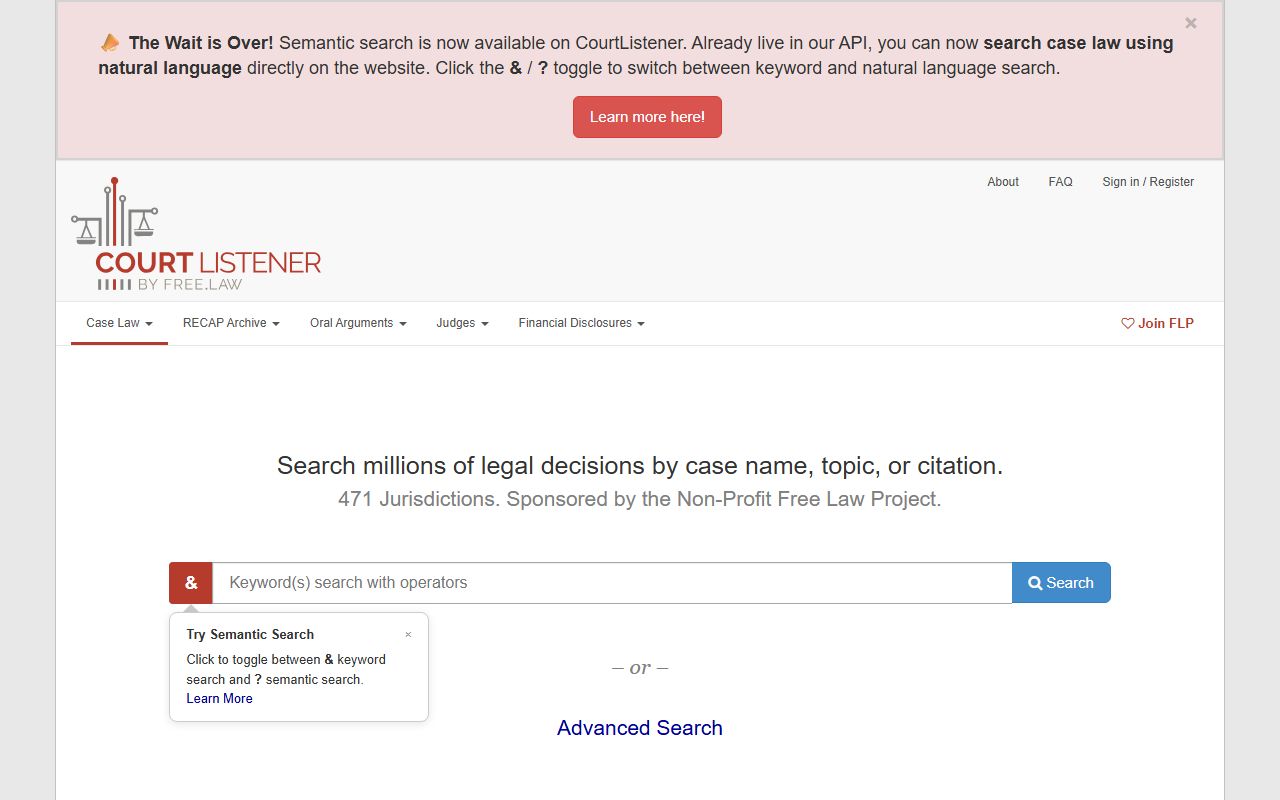
For official federal records, rely on PACER and the uscourts.gov sites. CourtListener works well as a free first look, but always confirm a docket with the court.
Certified Copies from the County Clerk
Online case data is not a certified copy. For a stamped document, the Orange County Clerk is the hub for Supreme and County Court papers, land records, and judgments. The office sits at 255 Main Street in Goshen, phone 845-291-2690, open Monday through Friday from 9 a.m. to 5 p.m. The Court Papers line is 845-291-3286, and the certified copies line is 845-291-3287.
To order a copy, the Clerk asks for the index number, the type of record, the filing date, and the names of the parties. Certified divorce copies can take at least five days. More on fees and request steps sits on the Orange County Clerk page.